
A nonprofit website is often the first place a potential donor goes before deciding whether to give. It’s where people look for proof that your organization is credible, strategic, and capable of turning dollars into measurable impact.
For executive directors and chief development officers, that makes your website much more than a marketing asset. It’s a fundraising tool and a signal of campaign readiness.
To support strong fundraising outcomes, nonprofits need a thoughtful mix of website content that informs, inspires, and builds trust. When a website clearly reflects planning, execution, and accountability, it supports a stronger overall fundraising approach—one that aligns with a thoughtful online fundraising strategy rather than reactive tactics.
Below are four types of nonprofit website content that help demonstrate strategic management and encourage donors to invest with confidence.
1. Success Stories That Prove Impact
When donors give to an organization, they want to see those funds contribute to real results. Success stories and case studies are some of the most effective ways to show that your nonprofit delivers on its mission. They turn abstract goals into tangible outcomes and help donors understand the return on their investment.
Well-crafted stories also reinforce strategic management. They show that your organization can identify a problem, implement a solution, and measure results.
Follow this advice for stronger storytelling content on your nonprofit’s website:
- Balance emotion and evidence. Pair human stories—quotes from participants, interviews, or short narratives—with concrete data points like percentages, totals served, or outcomes achieved.
- Use real photography whenever possible. Authentic images of staff, programs, or beneficiaries (with consent) build credibility in ways stock photos can’t.
- Follow a clear narrative arc. Frame stories around the problem, the intervention, and the result so donors can easily see cause and effect.
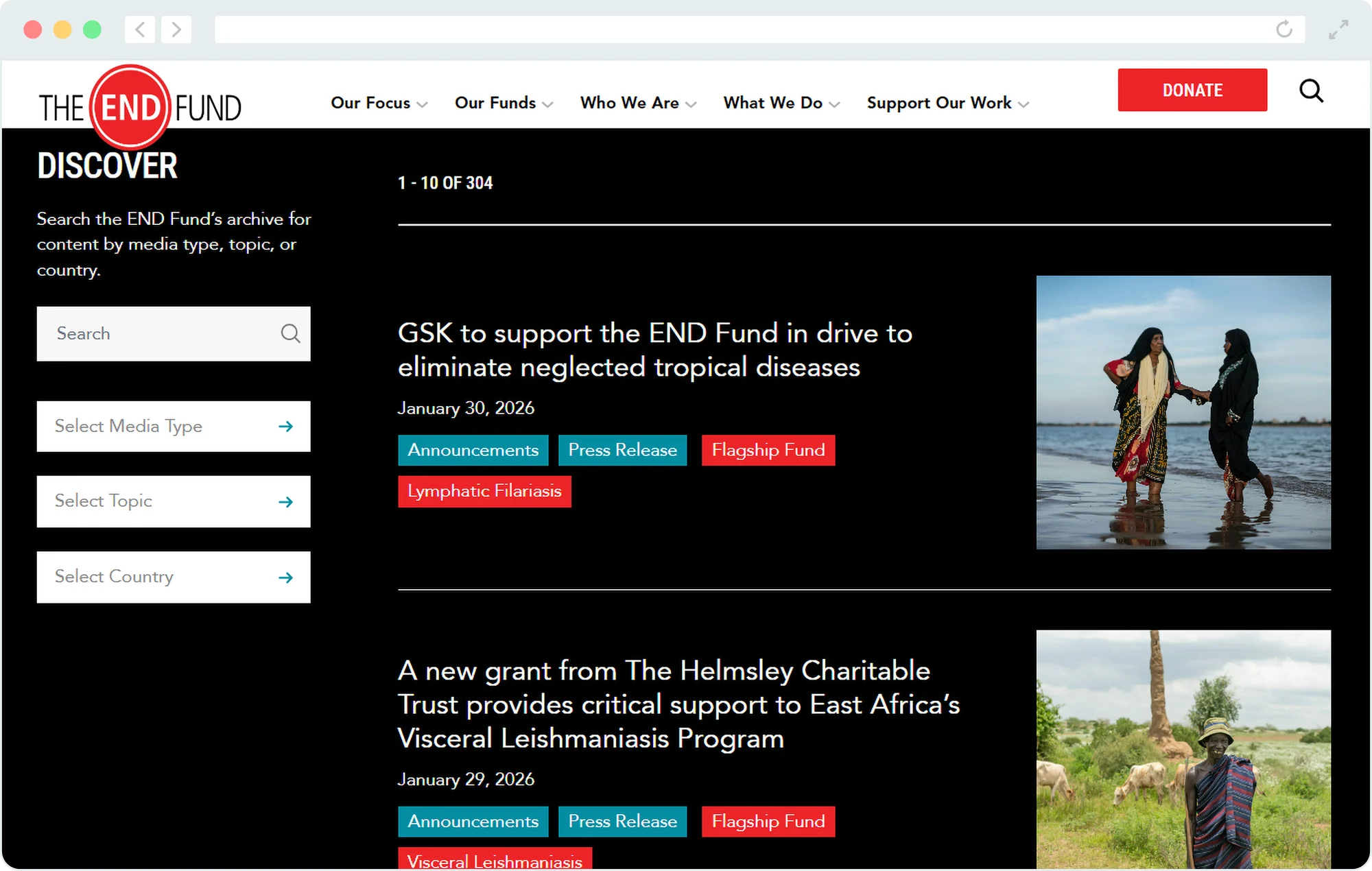
Cornershop Creative’s list of best nonprofit websites highlights The END Fund as having exceptional storytelling infused throughout its website. Program pages include outcomes, personal narratives, and visual cues that reinforce impact without overwhelming the reader. Check out their dedicated impact stories page:
2. Educational Resources to Build Authority
Educational content helps position your organization as a trusted expert in its cause area. For major donors and institutional funders, that authority matters. It shows that your nonprofit understands the complexity of the problem it’s solving and is equipped to lead long-term change.
Educational nonprofit website content can take many forms, including:
- How-to guides related to your mission or programs
- Explainer articles that break down complex issues for a general audience
- Frequently asked questions (FAQs) that address common donor and community concerns
Beyond donor trust, educational resources also support long-term growth. Publishing this type of content is a well-established search engine optimization (SEO) best practice for nonprofits, helping new supporters discover your organization organically through search.
Educational content also pairs well with your broader fundraising strategy. When donors understand the “why” behind your work, they’re more likely to stay engaged over time. This kind of clarity can support healthier donor pipelines and reduce burnout among your fundraising team.
3. Financials and Impact Reports for Transparency
Transparency isn’t optional when it comes to campaign readiness. Major donors, foundations, and corporate partners routinely evaluate nonprofits based on financial health, accountability, and clarity around impact.
Making financial and impact information easy to find on your website reduces friction in the giving process. Instead of requesting documents or asking follow-up questions, donors can quickly validate that your organization manages funds responsibly and aligns spending with mission goals.
Sharing this content also demonstrates agility and confidence. It signals that your team is tracking performance closely and making informed decisions based on real data.
Follow these best practices for financial and impact content:
- Publish reports directly on your website. Web-based impact and annual reports are more engaging and accessible than static PDFs alone.
- Use simple visualizations. Pie charts or infographics showing how funds are allocated help donors quickly understand where their money goes.
- Connect finances to outcomes. Show how sound fund management supports measurable results, reinforcing accountability across the organization.
UpMetrics’ guide to impact reporting recommends grounding reports in a clear impact framework—starting with defined objectives and selecting specific metrics that track progress toward those goals. By shifting the focus from “what was spent” to “what was achieved,” you provide a roadmap that proves your organization’s effectiveness.
Financial transparency also plays a role in broader fundraising planning. When development goals are clearly defined and progress is visible, organizations are better positioned to set and meet realistic targets.
4. Real-Time Campaign Updates To Drive Urgency
A website that never changes can unintentionally signal inactivity. In contrast, timely campaign updates show that your organization is actively managing fundraising efforts and responding to real-world needs.
Real-time content supports campaign readiness by reinforcing execution—not just planning. It shows donors that your team is monitoring progress, communicating clearly, and adapting as needed.
Examples of effective real-time nonprofit website content include:
- Milestone announcements that celebrate progress toward fundraising goals
- News from the field, such as quick updates, photos, or short interviews that show programs in action
- “Impact-at-stake” updates explaining what remaining funds will accomplish if a goal is met
This type of content also helps you maintain your website over time, which is essential for credibility and performance. From a fundraising perspective, real-time updates can counter donor fatigue by keeping supporters connected to progress and purpose. When donors see momentum, they’re more likely to stay engaged.
Wrapping Up
Strong nonprofit website content does more than tell your story. It demonstrates strategic management, reinforces campaign readiness, and builds the trust donors need before they give.
By investing in success stories, educational resources, transparent reporting, and timely updates, your website becomes an active fundraising asset. The result is clearer communication, stronger donor confidence, and a foundation that supports sustainable fundraising growth.
When preparing for your next campaign, reviewing your website content is a practical first step. The right signals in the right places can make all the difference.